Morocco is a country with a rich, generous and vibrant culture that holds treasures of care; its original name "Amur Akouch" actually means "Land of God".
It is commonly said that the traditional Argana massage originated in the warmth of Moroccan hammams, but its history is much older.
Morocco has indeed benefited from numerous influences over the centuries; Greek, Roman, Berber, Arab, etc., which have allowed it to forge an original and unique identity.
When myth meets reality
In ancient times, Morocco was called by the Greeks "Garden of the Hesperides".
It was in this fabulous orchard, located in a region called "the Far West", situated on the slopes of Mount Atlas, that the three nymphs of the west, daughters of Hesperis, resided.
The goddess Hera, wife of Zeus, initially entrusted them with the care of her famous golden apples, but she quickly changed her mind when she realized that they could not resist the urge to steal them from her.
She was then forced to send Ladon, the terrible hundred-headed dragon, to protect her fabulous treasure.
But she could not protect them from the trick!
Indeed, the giant Atlas promised Hercules that he would steal the famous fruits in his place, which he did without difficulty, in order to thank him for freeing his brother Prometheus from his chains.
The goddess Hera, wife of Zeus, initially entrusted them with the care of her famous golden apples, but she quickly changed her mind when she realized that they could not resist the urge to steal them from her.
She was then forced to send Ladon, the terrible hundred-headed dragon, to protect her fabulous treasure.
But she could not protect them from the trick! Indeed, the giant Atlas promised Hercules that he would steal the famous fruits in his place, which he did without difficulty, in order to thank him for freeing his brother Prometheus from his chains.
This enabled the hero to accomplish one of his 12 labors and, above all, made this essence famous throughout the Mediterranean basin.
According to oral tradition, the flowers of this tree made it possible to create the very first relaxing and soothing oil based on orange blossoms; the golden apples were actually just ordinary oranges.
The time for upheaval
In the 3rd century, Morocco under Roman occupation underwent great upheavals. Emperor Diocletian launched a major modernization program and endowed the country with grand monuments for civic and utilitarian purposes, as was the case for each new province of the Empire.
The unique feature of the Roman Empire was its ability to impose a rigid framework, while allowing each province to retain the best of their respective cultures, according to a principle of mutual enrichment.
The first thermal baths quickly appeared, where body treatments were practiced for the Romanized Moorish elite.
They greatly enjoyed relaxing and receiving massages amidst the fragrant aromas.
The first ancestral Moroccan massage techniques appeared and were perfected from this period onwards.
A new boom
Morocco is experiencing a new boom following the great wave of Islamization in the country.
Each city, in order to be entitled to this status, must equip itself with specific infrastructures, such as a mosque or hammam, in order to follow the recommendations of the prophet.
Muhammad (570-632) praised Greco-Roman baths, while adapting them to the needs of believers, considering them necessary for the population.
Muhammad was particularly convinced that the heat of the hammam facilitated reproduction and increased the fertility of believers. We now know that this is not at all the case, but this belief facilitated the emergence of a hygiene movement in North Africa and the Middle East.
The Muslim religion, in fact, very quickly integrated the purification of the body as an essential element of worship.
The religious prescription quickly became a hygienic and social habit.
The famous Arab historian Abu Sir said on this subject: "Your city is not perfect until it has baths."
An old Muslim saying suggests that "there cannot be a beautiful city without a hammam".
It was during this period that the practice of bathing and treatments truly became widespread in Morocco.
Public and private hammams are flourishing, with one now found in every district in large urban areas, finally allowing the entire population to enjoy these benefits.
From then on, the first complete Moroccan care rituals emerged, both popular and scholarly, using common but excellent quality products and, above all, financially accessible to the people.
In this way, peasants could relax their muscles after their long days of work in the fields by getting massages with delicately scented oils.
The only downside is that the large cultivated plains generally remain the property of the local aristocracy, who enrich themselves from the exploitation of these species.
Moreover, the orange tree is not the only prized species; the products of the olive tree and the argan tree quickly become indispensable to the lives of the people.
The argan tree
The argan tree is a mythical and sacred tree for the Moroccan people, who consider it the "Father of all", "the gift of God".
It is the emblematic plant of the kingdom and has been listed on the UNESCO World Heritage List since 2014.
Used for both its nutritional and cosmetic properties, it is subject to a specific operating code that sets the rules for its cultivation, harvesting, cutting, etc.
The argan nut, which usually only has 2 or 3 kernels, is shelled in order to extract the delicate oil.
This oil currently benefits from a "protected geographical indication" which helps combat any fraudulent use of its name.
In Morocco, its cultivation within cooperatives provides a livelihood for more than 2,000 people.
Annual production is around 3500 tonnes and represents more than 800,000 hectares planted.
Its precious oil has a fairly high production cost these days, because its production has remained artisanal, but also because it takes 38 kg of nuts to produce just 1 liter of oil.
Argan oil has numerous benefits both internally and externally.
In massage, it is mainly used for its glide, its high moisturizing and anti-aging power.
But also because it helps fight against stretch marks, superinfection of pimples and scars resulting from acne or chickenpox outbreaks.
Nowadays
Moroccan treatments and massages have always been adapted to the needs of local populations.
They are linked to their history and their environment, because there is no need to import rare species from distant lands when nature provides you with so much wealth.
The ethical approach of agricultural cooperatives allows today the production of high-quality, but also ethical, fair and organic, skincare products.
This is, in fact, what has allowed them to survive for so many centuries, but also to come back into fashion, to the point of becoming a true bestseller in the world of skincare around the world.
Currently, argan oil production cannot meet global demand.
Today, Morocco defines itself as an Arab-Berber kingdom, oriented towards modernism.
However, it retains a fierce determination never to deny its past, in order to make known internationally the full richness of its traditions and heritage.
The Argana massage
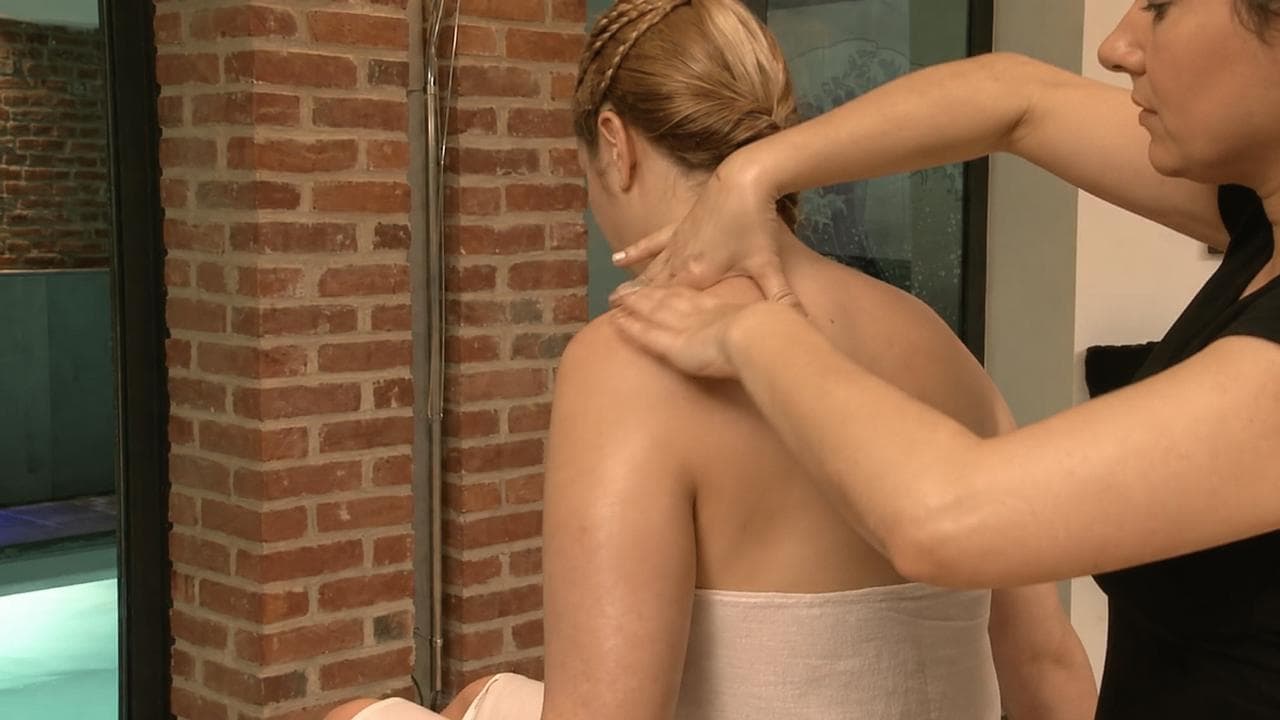
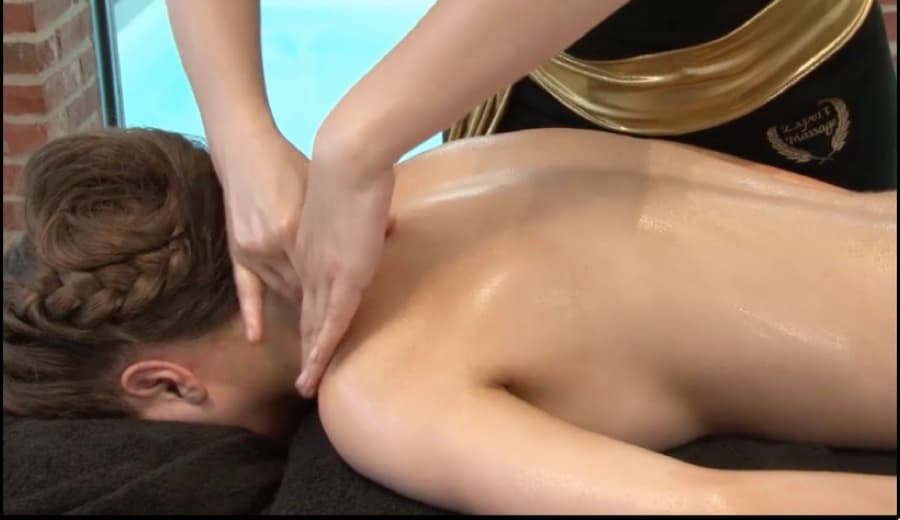
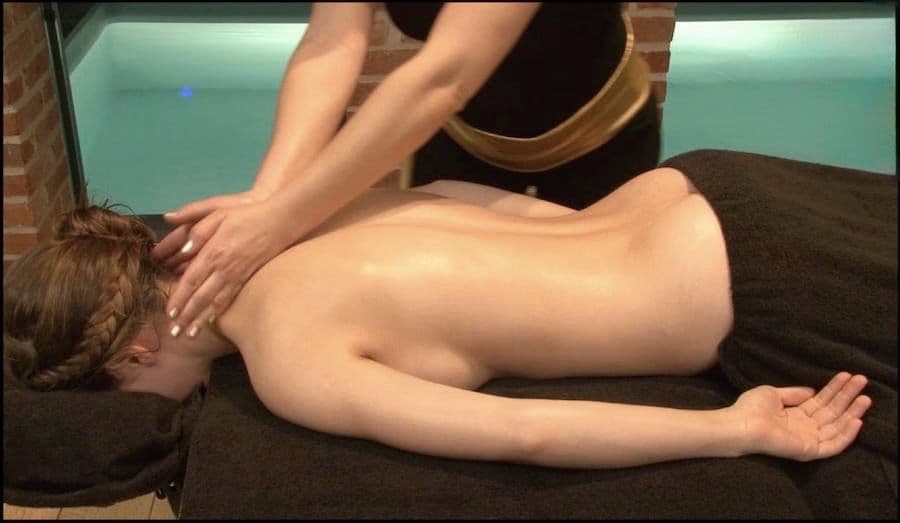
The Argana massage combines the use of ancestral manual techniques and products highly based on argan oil and orange blossom essence.
The Argana massage provides great relaxation by mobilizing muscle groups and diffuses a gentle, comforting warmth that invites letting go.
It is a relaxation massage par excellence, whose maneuvers soothe not only the body but also the mind.
This massage is usually performed in 30 to 45 minutes.